
...


A cutting-edge dialogue from NHK WORLD-JAPAN's New York studio. Covers the hot issue: from politics, economy, social matters, international situation or cultural topics.

President Biden will host 40 global leaders at the Leaders Summit on Climate. Environmental experts stress the urgency to limit earth's warming to 1.5 degrees Celsius to mitigate the most pressing impacts of climate change. What does that number mean? What will happen if we can't reach this goal? After abandoning the Kyoto Protocol and Paris Agreement, can the U.S. reclaim its leadership role? We asked Professor Mark Jacobson how things will differ this time when significant measures have still not been taken.
Scientists began warning us about climate change a long time ago. International discussions about reducing greenhouse gas emissions have been ongoing, but no significant steps have been taken. In the interim, temperatures keep rising in many places, and extreme weather events are more frequent. Some say it is impossible to completely withdraw from carbon energies. But Mark Jacobson has a plan to replace them with 100% clean renewables. We asked Prof. Jacobson how we can tackle this issue.

In late 2019, Akiko Iwasaki was alarmed about a new virus coming out of China. Reports revealed a possible respiratory infection which meant rapid transmission rates, and as she predicted, the virus soon spread worldwide. While vaccinations are now underway in the U.S. and other countries, variants have emerged, and cases are rising in some regions. So, are vaccines the light at the end of a long tunnel? Professor Iwasaki shares insights on vaccination, variants and the long-term effects of COVID-19.

In the U.S., Federal officials announced that fully vaccinated Americans no longer need to wear masks outdoors in small groups, when dining outside, or biking and running. As vaccination rates pick up, people are starting to do some things they had stopped doing because of COVID-19. This makes us wonder how much longer this pandemic will last? When will we achieve "herd immunity"? And when can we return to our pre-pandemic lives? We asked Professor Iwasaki about the prospects for the near future.

President Biden announced that the exit of US troops from Afghanistan would be completed by Sept. 11, 2021, the 20th anniversary of the terrorist attacks on the U.S. But even after the US declaration, bombings have not ceased, and insurgencies cast a dark shadow on the country's future. What consequences will the withdrawal bring to the nation and to the U.S. itself? We asked Cheryl Benard, an expert on national security issues, post-conflict reconstruction, and author of books on Islamic countries.
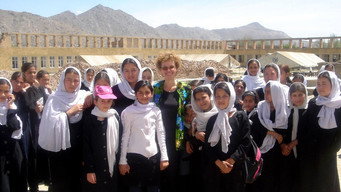
While hundreds of people have been killed in Afghanistan in May, reports claim that the U.S. troop withdrawal is accelerating months ahead of the deadline set by President Biden. Responsible for the destruction of the Bamiyan Buddhas, concerns grow over the Islamic fundamentalist group, the Taliban's return to power. If they regain control, how will they govern and treat citizens, especially women and the people who helped the U.S.? We continue our conversation with Cheryl Benard for insights.
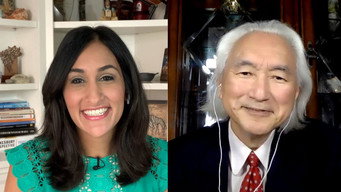
While Americans are enjoying the images and audio sent from the Mars rover, "Perseverance," news about China's Mars rover swept around the world. China has been rapidly accelerating its space program, launching the first module of its new space station scheduled to be completed in 2022, while the U.S.-led International Space Station's intended lifespan is set to finish in 2024. We asked Dr. Michio Kaku how significant these developments are and the outlook of China's future space ambitions.

Amazon founder Jeff Bezos announced he will journey to space in July when Blue Origin, the rocket company he founded, conducts its first human spaceflight. 50 years after the first moon landing, interest in space exploration has been gaining momentum. In fact, the next U.S.-led international mission, the Artemis Program, plans to land the first woman and first person of color on the moon by 2024. But why now? What is the future of space exploration? Dr. Michio Kaku discusses these developments.

The U.S. Supreme Court will hear arguments in a key abortion case from Mississippi that could revoke the landmark case Roe v. Wade, that established the legal right to abortion some 50 years ago in the U.S. This comes amid appointments of conservative judges by former President Donald Trump. Currently, 6 of 9 Supreme Court judges are conservatives. Hearings start in October with the ruling expected in 2022. Prof. Ziegler predicts the court will likely overturn the constitutional right to abortion in America.
Abortion rights disputes aren't just in the U.S. Former President Trump's "Global Gag Rule" required that foreign NGOs receiving US aid could not perform or promote abortions. Furthermore, the U.S. and some 30 nations signed the "Geneva Consensus Declaration," that states, "in no case should abortion be promoted as a method of family planning." What effect have these measures had, and what is the status of abortion globally? Prof. Ziegler warns that with abortion rights, no victory is permanent.

Naomi Osaka will return to the court at the Tokyo Olympics after canceling major tennis matches. Many were surprised when she cited concerns about her mental health, and now Olympians could face similar stresses. The one-year postponement has made it hard for athletes to schedule training, and they may have anxieties about competing during a global health crisis. Professor Parham explains the pressures of elite athletes, and the mental challenges they face at the Tokyo Olympic and Paralympic Games.

Under Tokyo's Coronavirus State of Emergency, the city's venues for the Olympics have no spectators. Recently, Tokyo has seen a surge in the number of cases of the highly contagious Delta variant, first detected in India and now spreading across the globe. This development raises new questions. How deadly is the variant? How effective are the vaccines? Can the Olympic and Paralympic games be safely conducted? And, will this pandemic ever end? We asked epidemiologist Dr. Caleb Alexander to share his insights.

50 million people worldwide have dementia, with 10 million new cases emerging annually. Alzheimer's disease is the most common form of dementia, but for 20-years, there have been no new drugs to tackle the disorder until now. In June, the US Food and Drug Administration approved Aducanumab, a new Alzheimer's medication. While this is a promising development, fierce debate surrounds its efficacy and approval process. FDA Advisory Committee member Dr. Alexander discusses this controversial drug.

With his uncanny ability to pitch and hit, baseball phenomenon Shohei Ohtani is often compared to Babe Ruth. Recovering from injuries in 2020, Ohtani is now having his best season with the Los Angeles Angels. He has earned respect from other sports professionals and has become a source of global fascination. But can he keep up the momentum and follow other Japanese MLB stars to the Hall of Fame? We asked sports writer Jeff Fletcher for his take on this "once-in-a-century" baseball player.

There have already been over 420 mass shootings in the US this year. And with the coronavirus pandemic causing lockdowns and requiring people to isolate for extended periods of time, there has also been an alarming increase in gun purchases, smaller number shootings, and domestic violence. We asked Robert Spitzer what is behind the rise in gun violence during the pandemic, and what strategies and solutions can help reverse this concerning trend.
When President Biden took office in 2021, he vowed to take action on gun control and end America's "gun violence epidemic." But with the US's long history of upholding the Second Amendment and the right to own firearms, along with the powerful influence of the gun lobby group the National Rifle Association, the fierce debate over gun rights continues. Dr. Robert Spitzer returns to discuss this complex issue, and if any recent laws or measures can be the breakthrough needed on gun control.
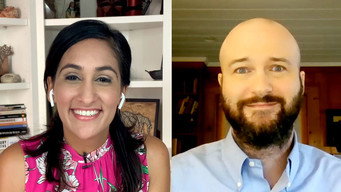
In September, 18-months after the coronavirus caused NYC theaters to shut down, the lights of Broadway will shine again as shows finally begin to reopen. Supporting thousands of workers, economically the industry took a big hit. Yet despite challenges, people found ways to continue their creative output and some productions found success online. While companies are thrilled to return to the stage, can Broadway safely welcome audiences back? We asked producer and writer Lee Seymour for his insights.
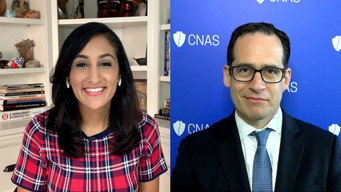
After 20 years in Afghanistan, America's "forever war" ended on August 30, but the exit was far from smooth. Weeks before the US withdrawal deadline, the Taliban seized control of the country, prompting tens of thousands to flee. Scenes of chaos and desperation at Kabul airport brought harsh criticism of the Biden Administration's handling of evacuations. How did things go so wrong? And what's next for the nation? Richard Fontaine shares his take on the future of Afghanistan under the Taliban.
When President Biden first took office, he promised US's allies that "America is Back." But his administration's mishandling of the withdrawal from Afghanistan and the more recent fallout with France over the AUKUS agreement has prompted concerns about the US's global security commitments and support of its military partners. Richard Fontaine returns to discuss Biden's foreign policy agenda and how the US can work more closely with its allies to retain its credibility and leadership role abroad.
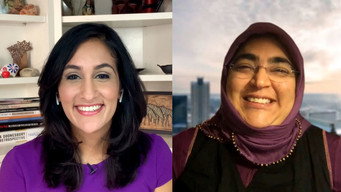
During the pandemic lockdown, technology and screens became a lifeline as we shifted to virtual schooling, working from home, and connected to friends and family remotely. But as online screen time increased, so did parents' concerns about their children's mental and physical health and the adverse effects of advertising and social media. So, what has been the impact of all this extra screen time, particularly on children? We asked Mayo Clinic pediatrician Dr. Nusheen Ameenuddin.