
...

The Adventures of Young Indiana Jones Documentaries
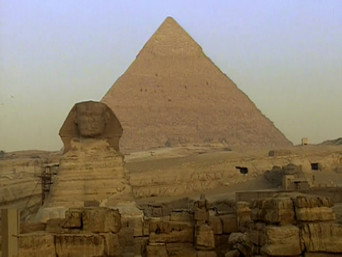
Man's history on Earth dates back at least tens of thousands of years, yet written records stretch back to only a fraction of that. Helping clarify the picture of humanity past is the science of archaeology. Though the cinematic escapades of Indiana Jones describe a world of globe-trotting adventure, in truth archaeologists are more like detectives, piecing together clues to mysteries of what has come before.
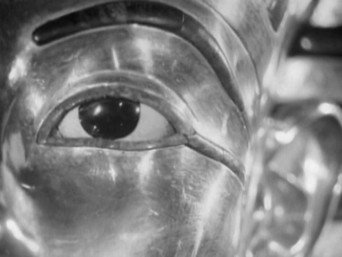
Howard Carter's unflagging persistence and stubbornness led to one of the greatest archaeological discoveries of the 20th century: the tomb of King Tut. Yet it was that same strong-headedness that would time and again jeopardize Carter's career. Learn more about the man and his discovery which propelled Egyptology into the pop culture landscape
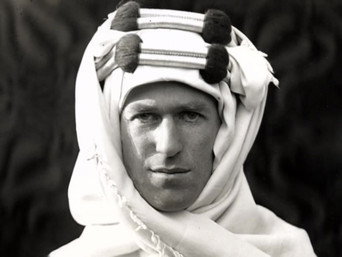
He was an action hero as well as an intellectual hero. T.E. Lawrence escaped a safe office job during World War I to become a guerilla war mastermind in desert combat, fighting alongside Arabs to throw off the rule of the Ottoman Empire. But despite British promises of Arab independence, the Middle East would end up being carved by European colonial treaties, and Lawrence faced the challenges of keeping his word to his trusted compatriots of the desert.
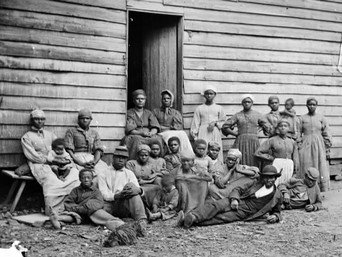
Humanity has lived in, with and on the profits of slavery for most of its history. Many of its greatest achievements and monuments have tragically been built on the backs of slave labor. How could people place their economic needs ahead of the humanity of their fellow beings? How could this horrific system have lasted for so long? In this documentary track the history of slavery from Ancient Greece, to the Crusades, to the colonization of the new world and the racial slavery that sparked the American Civil War. The journey from slavery to freedom is incomplete and continues as there are still over 20 million people enslaved today.
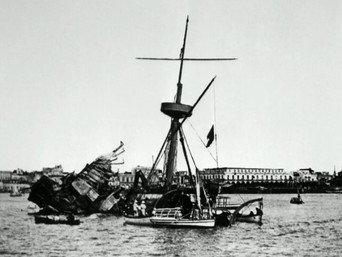
Known during his time as "the American Lion," Theodore Roosevelt led the U.S. into the 20th Century. He was the first president to travel abroad, the first to travel on an airplane - a grandiose figure of huge personality, Roosevelt led enough life and followed enough passions for five lifetimes. One of his many legacies is the move towards conserving the nation's abundant natural resources for future generations.
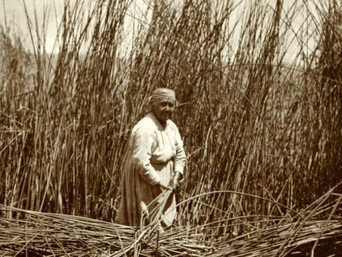
As far as we know, planet Earth stands alone as a cradle of life in the universe. Ecological efforts strive to protect the balance that fosters that life. In this documentary, see the important role humans play as stewards of the planet's health, correcting the mistakes of the past century, with specific examples from northern California.
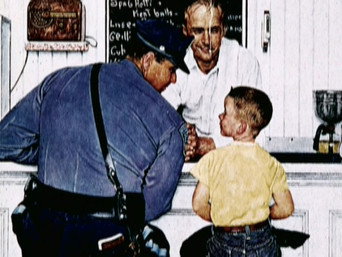
Perhaps no artist came to capture the optimistic spirit of America in the first half of the 20th Century better than Norman Rockwell. In an era before television became the mass medium that united the nation, Americans turned to the pages of The Saturday Evening Post to learn about themselves and the world abroad. Facing them on the covers of the most popular issues was a perfectly frozen picture of Americana captured by Rockwell. And yet for all his achievements, he never took comfortably to the label "artist."
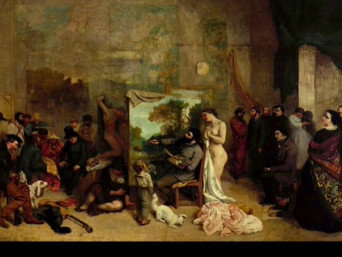
Paris in the last half of the 19th Century was a city on the move. It was a modern metropolis expanding into the future, with electric lights and steel towers. And yet its art was just as staid as it had been for the past 300 years. None of energy and innovation was translated onto the backwards-looking canvas. But some passionate young artists were about to rise up in revolt, to express an edgy new personal vision that would forever change art and the way we see the modern world.
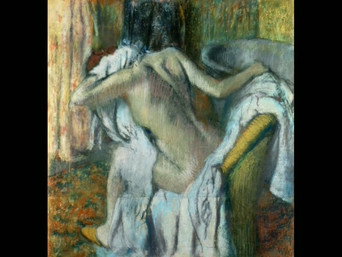
Among the ranks of fed-up young artists reshaping the world of modern art was Edgar Degas. At the heart of the movement, Degas stood alone as coming from an aristocratic and wealthy family, unlike his more earthy compatriots. Yet he still managed to shock the art world by observing and painting his fellow Parisians in everyday life. His work with the female nude was particularly striking and scandalous, as he never posed his subjects as "classical artists" would. Political and socially conservative, Degas would nonetheless be branded as a rebel for his landmark works.
Enthusiasts of maverick artist Pablo Picasso will readily credit him and him alone for envisioning the bold new form of cubism, but a much quieter yet no less integral artist deserves equal mention. George Braque and Pablo Picasso enjoyed a close, collaborative relationship fueled by competitiveness, as each of their new works served as inspiration for the next great achievement. This documentary examines the relationship between Picasso and Braque and the remarkable outcome of their collaboration.
To this day, an opera by Giacomo Puccini will play to a packed house. Puccini's works -- including La Bohème -- are engaging stories set to stirring music that are still very much in demand. Rather than craft operas about mythological concepts, momentous historic events or classical literature, Puccini's stories were about of real people in relatable circumstances, inspired by Puccini's own life experience.
Most everyone can recognize the sound of opera when they hear it, but few of us know what opera really is. What is the secret to opera? Discover how the complex interplay of multiple art forms -- song, music, costume, stage direction and drama -- blur to become a truly unique experience by visiting a modern class of opera performers, learning of the historic origins of opera, and following a performance of The Marriage of Figaro.
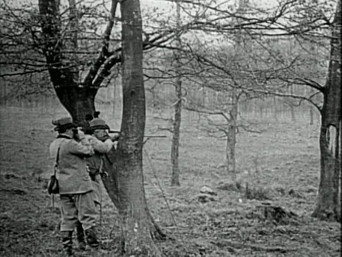
In June 1914, a special train carried Archduke Franz Ferdinand, heir to the Austrian throne, to Sarajevo. Terrorists would strike, and a 19-year old gunman killed the Archduke and his wife. A chain-reaction disaster followed, as a web of diplomatic alliances dragged the world into a war that would kill millions, maim millions more, and bring an end to royal dominance of Europe.
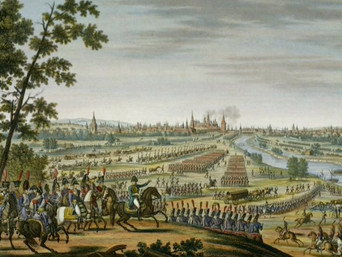
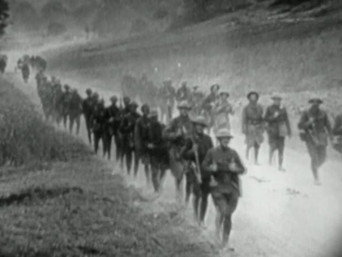
Between August 1914 and November 1918, 27 countries would declare war. Over 60 million men from around the world would fight and over eight-and-a-half million would die. In the summer of 1914, none of the world's leaders set out to wage the most destructive war the world had yet known, and yet they did. Why?
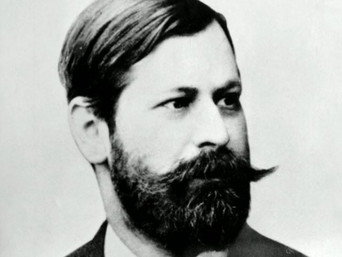
There was a time where doctor-patient relationships were strictly authoritarian -- doctors did not listen, but rather prescribed -- and those suffering from mental problems endured cold and brutal recuperative programs. Sigmund Freud changed all that with the development of psychoanalysis, wherein he listened to the patient, mapped the unconscious and elevated the study of dreams from mysticism to science. Freud's bold and occasionally regrettable conclusions stirred the conservative society of his time, yet still hold considerable influence on the world today.
A protégé of Freud, Carl Gustav Jung felt that his mentor's ideas were too limiting, and he sought other sources of influence on the behavior of individuals and cultures. It was Jung's explorations that allow us to identify how we typify people and behavior into archetypes, and how the underpinnings of culture and society shape who we are. Through it all, Jung remained steadfastly committed to the strength and quality of the individual, regardless of what the outlying society dictates the norm to be.
The analysis of the mind and the exploration of human motives and behavior are some of the breakthrough areas of study in the 19th and 20th century, shaped by visionary thinkers and landmark experiments. This documentary tracks the development of the first scientific approaches of Wilhelm Wundt, the practical applications of Sigmund Freud, the controversial philosophy of eugenics and the startling discovers of B.F. Skinner and Stanley Milgram.
Born into the highest circles of Russian society, Leo Tolstoy wrestled with himself for the excesses of his aristocratic life. His conflicted journals became the basis for lifetime of writing which would produce the masterpieces War and Peace and Anna Karenina. The latter work exhausted him emotionally, causing him to discover new life with a pragmatic brand of Christianity, and live out his final days as a simple peasant.
Beginning in the 19th century, Russian writers created a national literature unparalleled in its moral and philosophical depth and intensity. They rebelled against conventions of what was expected in a novel and changed the course of world literature while facing unique political challenges. Learn more about the works of Aleksandr Pushkin, Nikolai Gogol, Ivan Turgenev, Leo Tolstoy, Feodor Dostoyevsky, Anton Chekhov, Maxim Gorky and Aleksandr Solzhenitsyn.
No other philosopher has ranged so broadly over so many topics, nor made so many discoveries than Aristotle. In ancient Greece, Aristotle differed from his mentor Plato by not attributing answers to an unseen hereafter, but rather seeking to understand life by examining the here-and-now. Aristotle's analytical leanings and quest for knowledge led to the development of logic, and his constructions continue to shape our world today, from the syllogisms employed by lawyers to win cases to the rules that define the latest computer code.
