
...

Walking Britain's Roman Roads
在这个由六部分组成的系列中,我们看一看其中的六条道路,它们最能说明罗马的无情冲锋震撼了不列颠群岛,对这片土地的影响不可磨灭。我们与考古学家合作,利用现代技术揭开几千年来消失在地球上的世界。通过与皇帝、百夫长和奴隶们走过的相同道路,我们重新审视那些被遗忘的人的生活,因为帝国在不列颠群岛上前进。

Dan Jones travels the oldest and longest Roman road, Watling Street, built in 43 AD following the Roman invasion and colonisation of Britain. It runs for 240 miles from Kent to Shropshire.

Dan Jones travels the historic Roman road of Ermine street, which connects the two great cities founded by the Romans, London and York. Along the way he explores the story of religion in Roman Britain. While they were importing their own beliefs, they also absorbed native traditions and later endorsed the establishment of Christianity here.

This time Dan Jones explores not one but two Roman roads: Dere Street, the northern-most Roman road in Britain, which runs from York to Scotland, and Stanegate, a key East- West route which runs alongside the great defensive barrier of Hadrian's Wall. His journey reveals the story of Roman military and colonial ambitions in Britain.

Dan Jones travels along Fosse Way, arguably Britain's most hedonistic Roman Road. The route stretches for 230 miles through the heart of England, from Exeter to Lincoln. The Latin word for ditch, fossa, is likely to have inspired its name.
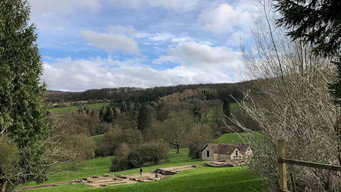
Dan Jones travels the historic Roman road of Ermin Way. Not to be confused with Ermine Street which runs north from London to York, Ermin Way is arguably Britain's most industrial Roman road. Dan's journey reveals just how many of Britain's natural resources were exploited by the Romans and exported into their wider empire in Europe.
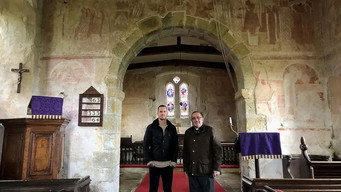
Dan Jones travels the historic Roman road of Stane Street, which runs for around sixty-seven miles from London to Chichester. Along the way he considers how our Roman overlords abandoned Britain in the early fifth century AD, when their empire came under attack from the barbarian tribes of northern Europe. The very roads the Romans built to conquer Britain now became their escape routes.