
...
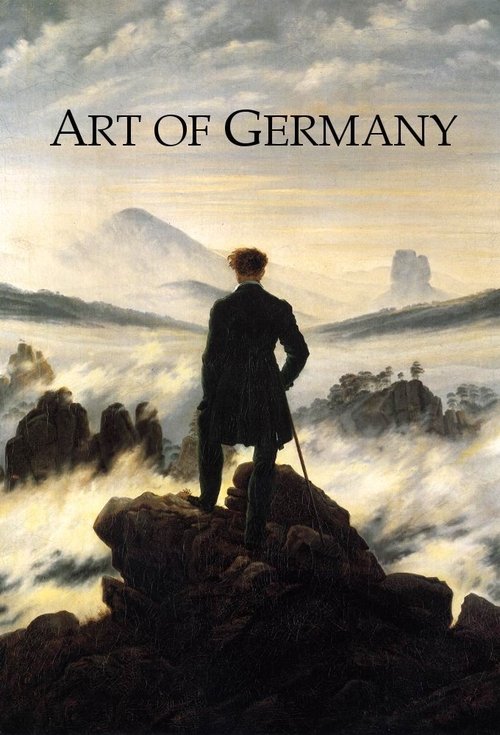
Art of Germany
安德鲁·格雷厄姆·迪克森(Andrew Graham-Dixon)在一项吸引人的研究中,讲述了一个民族艺术的故事,它传递着激情、精确、希望和更新。他将逃避现实与控制、与自然的深厚亲和力与对机器的热爱相提并论。这个迷人的故事将我们从高耸的科隆大教堂、阿尔布雷希特·杜勒(Albrecht Dürer)的木刻画和Grünewald的绘画,到哥特式童话故事新天鹅堡、卡斯帕·戴维·弗里德里希(Caspar David Friedrich)的波罗的海景观,以及阿道夫·门泽尔(Adolph Menzel)和科勒维茨(KäThe Kollwitz)的工业化表达。随着该系列的进展,它罕见地关注了希特勒痴迷于视觉艺术的文化影响,揭示了艺术如何成为冷战的舞台,并审视了当代最有影响力的艺术家“有远见的”约瑟夫·贝伊斯(Joseph Beuys)的救赎作品。

Andrew Graham-Dixon begins his exploration of German art by looking at the rich and often neglected art of the German middle ages and Renaissance. He visits the towering cathedral of Cologne, a place which encapsulates the varied and often contradictory character of German art. In Munch he gets to grips with the earliest paintings of the Northern Renaissance, the woodcuts of Albrecht Durer and the cosmic visions of the painter Albrecht Altdorfer. Andrew also embarks on a tour of the Bavarian countryside, discovering some of the little-known treasures of German limewood sculpture.

Andrew Graham-Dixon continues his exploration of German art by looking at the tumultuous 19th century and early 20th century, and how artists were at the forefront of Germany's drive to become a single nation. Andrew travels to the north and the coastal town of Griefswald, the birthplace of Caspar David Friedrich, the most influential of the German Romantics, to discover how the Baltic coast impacted on his mysterious paintings of the German landscape. He also visits Berlin and explores the art of the powerful Prussian state, which would spearhead the unification of Germany in 1871. The episode ends with the outbreak of the World War I and the attempts of artists Franz Marc and Otto Dix to rationalise the catastrophic experiences of the world's first technological war, a war driven by the innovations of Prussia.
Andrew Graham-Dixon concludes his exploration of German art by investigating the dark and difficult times of the 20th century. Dominating the landscape is the figure of Adolf Hitler - failed artist, would-be architect and obsessed with the aesthetics of his 1,000-year Reich. In a series of extraordinary building projects and exhibitions, Hitler waged a propaganda war against every kind of modern art as a prelude to unleashing total war on the whole of Europe. After the war the shadow of the Third Reich persisted, Germany remained divided and traumatised. How would artists deal with a past that everybody wanted to forget? From the work of Otto Dix and George Grosz and the age of the Bauhaus to the post-war painters Georg Baselitz, Hilla Becher and the conceptual artist Joseph Beuys is a long strange journey, but the signs are there that art has a place at the heart of the new reunited Germany.